
Christina Panteli
Hormones are the body’s quiet timekeepers. They govern metabolism, energy, fertility, skin and hair – differently in women and men, and differently at every stage of life. Endocrinology means recognising these connections instead of treating individual symptoms.
Areas of focus
Diagnosis and treatment of hormonal disorders – with these areas of focus. Open a topic for details.
Thyroid and parathyroid glandsSmall organs with a big impact on energy and metabolism.
Over- and underactive thyroid, Hashimoto’s, nodules and enlargement of the thyroid, as well as disorders of the parathyroid glands, which regulate calcium balance. Assessment combines laboratory tests and ultrasound.
PMOS, formerly PCOSMore than a cycle problem.
Polycystic ovary syndrome is being renamed polyendocrine metabolic ovarian syndrome. The new name describes what matters in treatment: cycle, androgens, insulin and metabolism are intertwined and belong together.
Difficulty conceivingWhen hormones get in the way.
The thyroid, prolactin, androgens or insulin resistance can affect fertility. I investigate hormonal causes in a targeted way and treat them – as a complement to gynaecological or reproductive medicine care.
Adrenal glandsCortisol, aldosterone and adrenaline in balance.
I investigate over- and underactivity of the adrenal glands as well as incidentally discovered adrenal tumours – for example with hard-to-control high blood pressure, persistent exhaustion or abnormal lab results.
Autoimmune polyglandular syndromeWhen the immune system attacks several hormone glands.
Hashimoto’s, type 1 diabetes, Addison’s disease or coeliac disease sometimes occur together. Anyone with an autoimmune disease of one hormone gland benefits from a targeted look at the others.
Obesity and metabolismWeight is also a matter of hormones.
Insulin resistance, the thyroid, cortisol and sex hormones influence weight and body composition. Diagnosis and therapy start with metabolism – with medical support and without blame.
Hair loss and hyperhidrosisVisible signs, often with a hormonal cause.
Thinning hair and excessive sweating can be linked to the thyroid, androgens, iron levels or the menopause. I look for the cause first, then for the right treatment.
Every stage of life has its own curve.
1Twenties and thirties
The fertile years
Estradiol and progesterone follow the same pattern every month. When it falls out of rhythm, it shows in cycle disorders, in skin and hair, in mood or in difficulty conceiving.
2often from the mid-forties
Perimenopause
Ovulation becomes irregular, estradiol fluctuates more than ever before and progesterone is increasingly lacking. Sleep problems, brain fog and irritability are typical – often while periods are still regular.
3on average around 51
Menopause
The final period, confirmed in retrospect after twelve months without bleeding. Estrogen largely disappears as a protective factor for the heart, blood vessels, bones and brain.
4Postmenopause
The years after
Now prevention is what counts: heart, bones, metabolism and mental fitness – so that more years of life also become more healthy years.
No hormone works alone.
The body is a network. Choose an area to see what it is connected to.
Ovaries
They produce estradiol, progesterone and some of the androgens. Their decline shapes the menopause and affects almost every organ.
Connected to: Pituitary gland, Androgens, Bones and muscles, Heart and blood vessels, Brain and sleep
The control centre in the brain. Through FSH, LH and prolactin it sets the pace for the ovaries, thyroid and adrenal glands.
Connected to: Ovaries, Thyroid, Stress axis
They produce estradiol, progesterone and some of the androgens. Their decline shapes the menopause and affects almost every organ.
Connected to: Pituitary gland, Androgens, Bones and muscles, Heart and blood vessels, Brain and sleep
Testosterone and DHEA also play a role in women: for energy, libido and muscle – and, in PMOS, for skin and hair.
Connected to: Ovaries, Insulin and blood sugar, Stress axis, Bones and muscles
It regulates energy and metabolism. Its disorders often resemble menopausal symptoms and are therefore easily overlooked.
Connected to: Pituitary gland, Insulin and blood sugar, Brain and sleep
Cortisol from the adrenal glands affects sleep, blood sugar and belly fat. Chronic stress also throws the sex hormones out of balance.
Connected to: Pituitary gland, Insulin and blood sugar, Brain and sleep, Androgens
Insulin resistance links PMOS, weight gain during the menopause and cardiovascular risk.
Connected to: Androgens, Heart and blood vessels, Liver, Stress axis, Thyroid
Estrogen protects the blood vessels. After the menopause, women’s cardiovascular risk rises significantly.
Connected to: Ovaries, Insulin and blood sugar, Liver
Estrogen affects memory, mood and temperature regulation. Brain fog, hot flushes and sleep disorders are often linked to it.
Connected to: Ovaries, Stress axis, Thyroid
As estrogen falls, bone density decreases. Strength training and early diagnosis help prevent osteoporosis.
Connected to: Ovaries, Androgens
It breaks down hormones and regulates blood lipids. Fatty liver is closely linked to insulin resistance.
Connected to: Insulin and blood sugar, Heart and blood vessels
How I work
Four steps that repeat with every question.


Listen
It all starts with a detailed conversation about your symptoms, stage of life, medical history and goals.
Measure
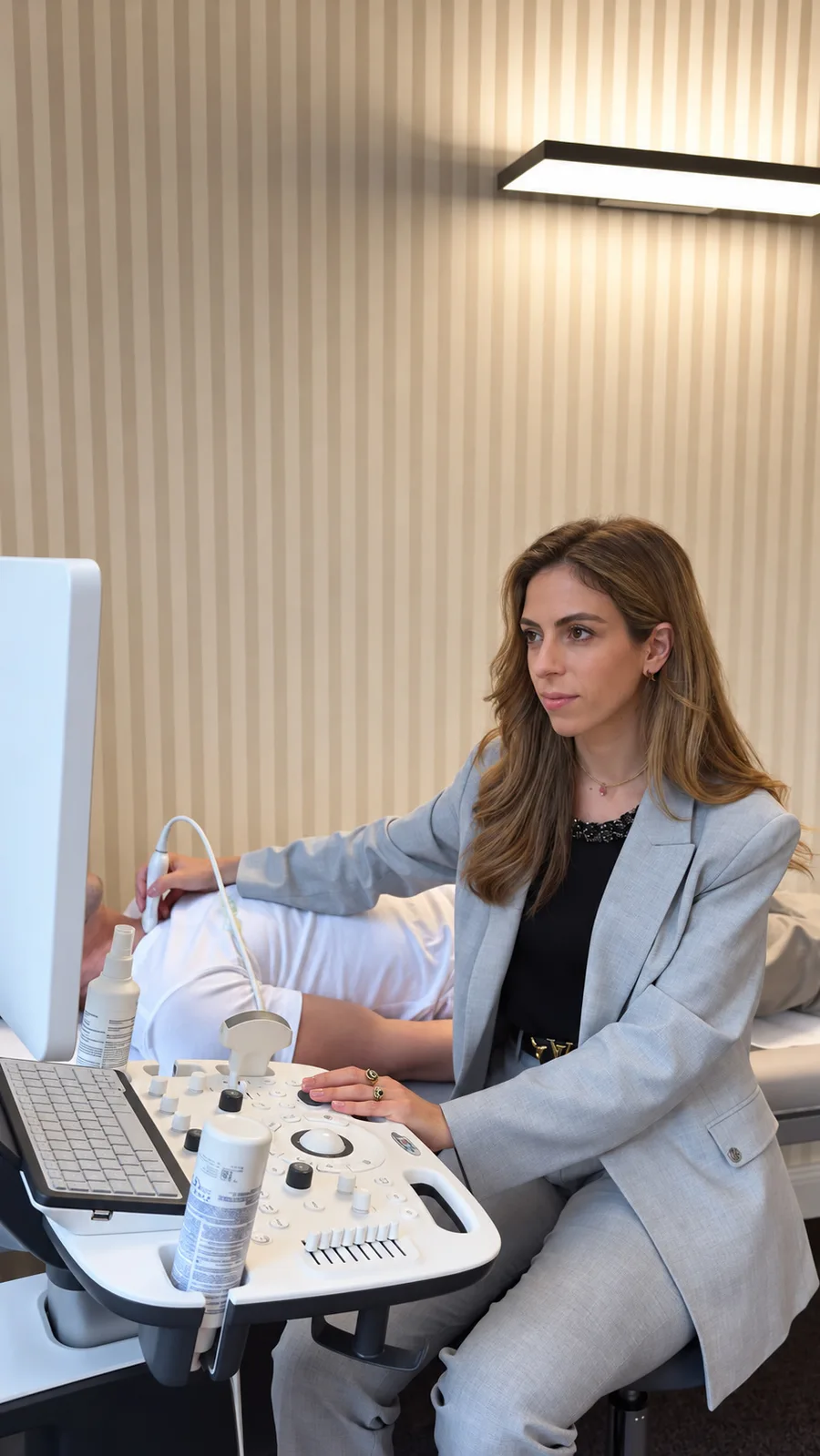
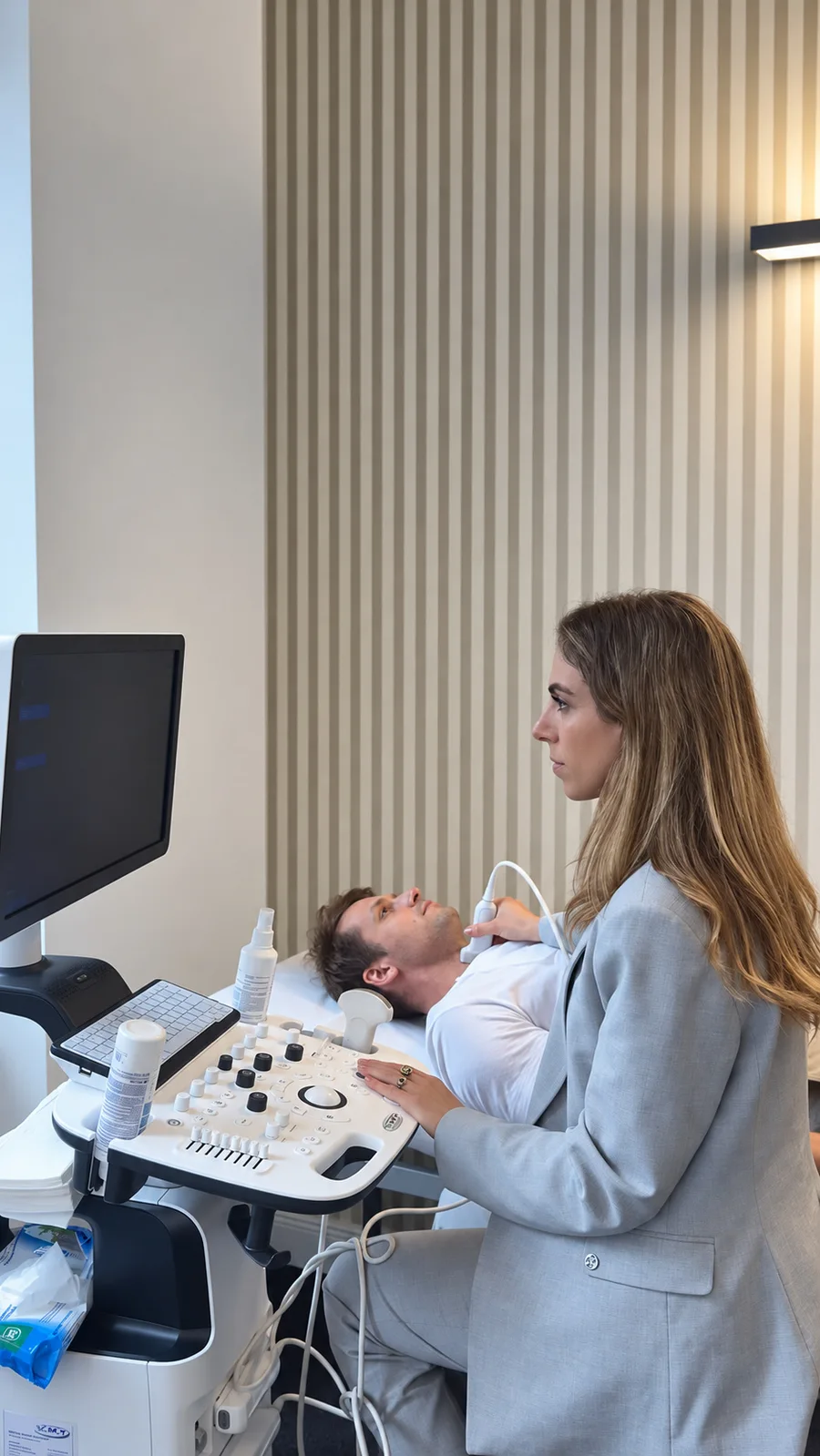
Targeted laboratory tests and ultrasound, matched to your cycle phase and the question at hand.
Connect
Findings from hormones, metabolism and imaging form an overall picture instead of isolated values.
Accompany
Therapy is a process. I check how it is working and adjust it when something changes.

About me
Many symptoms have a hormonal cause that goes unrecognised for a long time. I am convinced that patients deserve a more precise answer.
With Cypriot and Canadian citizenship, I came to Germany in 2009 after finishing school in Paphos. After studying medicine in Göttingen, I became a specialist in internal medicine, endocrinology and diabetology. Today I work at the private practice EndoKonsil am Kö-Bogen in Düsseldorf.
Career
- 2009
School leaving certificate in Paphos, Cyprus
Then moved to Germany.
Medical studies
Georg-August-Universität Göttingen.
Specialist
Internal medicine, endocrinology and diabetology.
- since March 2025
EndoKonsil
Currently at the private practice EndoKonsil am Kö-Bogen, Düsseldorf.
True or false?
Five common beliefs about hormones – and what medicine says about them today.
Not quite. The hormonal transition often begins years earlier. Sleep disorders or mood swings can be early signs while periods are still regular.
No. Slim women can also have PMOS and insulin resistance. The diagnosis does not depend on weight.
Not necessarily. Hashimoto’s often shows first through antibodies and changes on ultrasound – long before thyroid levels become abnormal.
Not necessarily. Reference ranges are averages. What matters is whether the values, cycle phase and symptoms fit together.
Not necessarily. Thyroid disorders, iron deficiency or an excess of androgens may be behind it – and can be specifically investigated and treated.
Try it yourself
Three small tools that show how hormones and metabolism work – schematic, but close to clinical practice.
The hormone clock
Many hormones follow a fixed daily rhythm. Drag the hand and see how cortisol, TSH and melatonin change over 24 hours.
- CortisolStress hormone of the adrenal glands–
- TSHControl hormone of the thyroid–
- MelatoninSleep hormone of the pineal gland–
Cortisol reaches its daily peak. That is why it is usually measured in the morning for diagnosis.
Schematic pattern. For many hormone tests: measure in the morning, and ideally always at the same time.
Blood sugar after a meal
What and how we eat changes the blood sugar curve – and with it, how much insulin the body has to release. Put together a meal.
White bread alone: blood sugar rises quickly and steeply.
Schematic illustration, not an individual measurement. With insulin resistance – for example in PMOS or obesity – the body needs considerably more insulin for the same meal.
The thyroid on ultrasound
This is what a cross-section of the neck looks like on ultrasound. Switch between healthy tissue, Hashimoto’s and a nodule, and tap a structure.
Even, bright tissue – typical of a healthy thyroid.
Choose a structure to highlight it in the image.
Schematic drawing of a cross-section, not a real ultrasound image. The left side of the image is the right side of the body.
BMI and waist circumference
The body mass index relates weight to height. The waist-to-height ratio also shows how much fat sits around the abdomen. Set the sliders to your values.
BMI is a rough guide: it does not distinguish between muscle and fat. Belly fat says more about metabolism – as a rule of thumb, your waist circumference should be less than half your height.
For adults. Your entries stay on your device and are neither stored nor transmitted.
Measure your waist midway between the lowest rib and the hip bone, after breathing out normally.
- below 18.5Underweight
- 18.5 to 24.9Normal weight
- 25 to 29.9Overweight
- 30 to 34.9Obesity class I
- 35 to 39.9Obesity class II
- 40 and aboveObesity class III
- Waist to heightbelow 0.5 recommended
Hormones work out of sight. Their disorders should not stay hidden.
Book your appointment conveniently online via Doctolib.
Book an appointment on Doctolib, opens in a new tabFor talks, interviews and professional exchange
Send an email